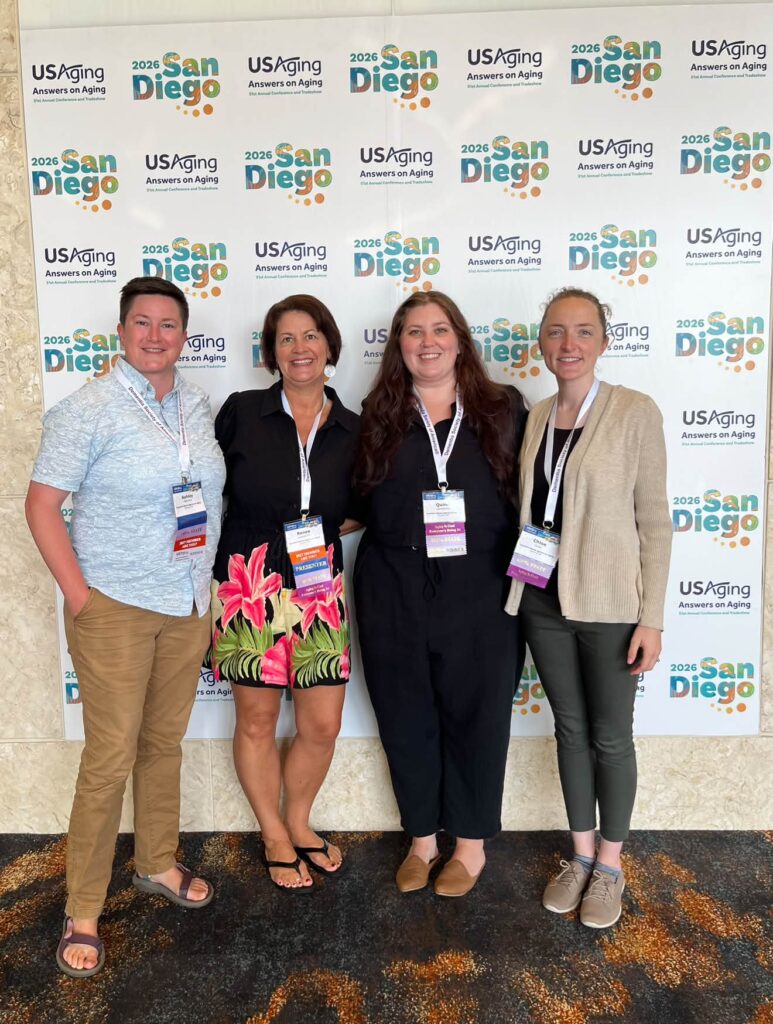
As the nation’s oldest state, Maine is confronting the housing challenges of an aging population earlier than much of the country. While that reality presents significant challenges, it also creates an opportunity to develop practical solutions that can help older adults remain safely housed and to share those lessons with communities facing similar demographic shifts. This week, Southern Maine Agency on Aging shared what it’s learned with leaders from across the nation at the 2026 USAging Conference.
Housing has become one of the most urgent issues facing older adults in Maine – and increasingly, across the country. Rising rents, increasing property taxes, limited affordable housing, and fixed incomes are forcing many older adults into impossible choices. Nationally, older adults are the fastest-growing segment of the homeless population, and many are experiencing housing instability for the first time in their 70s, 80s, and even 90s.
At Southern Maine Agency on Aging, those challenges are no longer the exception, they’re part of everyday work. Housing-related concerns now account for more than half of the organization’s Care Coordination caseload. Since late 2023, SMAA has provided more than 1,700 housing navigation contacts, helping older adults navigate everything from affordable housing applications and benefits to eviction prevention and community resources.
Bringing Maine’s Solutions to the National Stage
Earlier this week, Chief Operating Officer Renee Longarini and Director of Community Impact Ashley Perrone represented the organization at the USAging Answers on Aging Conference in San Diego, the nation’s largest gathering of leaders dedicated to helping older adults age well in their communities.
Their presentation, Housing Connections: Southern Maine Agency on Aging and Legal Services for Maine Elders’ Eviction Prevention Program, highlighted an innovative partnership designed to help older adults avoid eviction while connecting them with the resources they need to remain safely housed.
The session introduced aging-services leaders from across the country to a collaborative model that combines legal advocacy with hands-on housing navigation – an approach that recognizes preventing eviction requires more than legal assistance alone.
“Because Maine is the oldest state in the nation, we’re experiencing many of these housing challenges earlier than other states,” said Renee. “We’re learning what works, where the gaps are, and how important partnerships can be. If sharing those lessons helps another community support older adults more effectively, that’s a win for everyone.”
Housing Is About More Than a Place to Live
Housing instability rarely begins with a single event. Housing instability can result from a serious illness, the loss of a spouse, a rent increase, rising property taxes, a landlord selling a building, or a change in mobility that suddenly makes a longtime home unsafe. For many older adults, these challenges happen all at once, forcing them to navigate legal proceedings, housing searches, benefits applications, healthcare needs, and financial uncertainty simultaneously.
Recognizing that no single organization can address all of these needs alone, SMAA partnered with Legal Services for Maine Elders to create an eviction prevention pilot within its Housing Connections program. The model brings together legal advocacy and aging services in real time.
While Legal Services for Maine Elders works to prevent or delay an eviction, SMAA Resource Specialists help older adults navigate housing options, applications, benefits, community resources, and long-term planning. Instead of disconnected referrals, older adults receive coordinated support from organizations working toward the same goal: housing stability.
“Every housing call starts with someone’s story,” Renee said. “Our job is to bring together the right partners before a temporary crisis becomes permanent homelessness. By working together, we’re able to address not just the legal issue, but the whole situation surrounding it.”
Results That Matter
To date, 66 older adults have received coordinated assistance through the eviction prevention pilot.
The program has helped older adults:
- Remain in their current homes
- Secure affordable housing
- Join affordable housing waitlists while remaining housed
- Move in with family members when appropriate
- Connect with additional community resources
- Continue their housing search with ongoing support from SMAA
The pilot has demonstrated that meaningful progress doesn’t always require a large or complicated initiative. Strong partnerships, warm referrals, and shared accountability can significantly improve outcomes for older adults facing housing crises. Just as importantly, it demonstrates the unique role agencies on aging can play in helping older adults maintain stability, independence, and dignity.
Continuing the Conversation